This is not an air freshener.
Professional scenting is a tool for shaping the atmosphere of a space — not simply adding a pleasant smell. In this article, we explain how scent works, why it influences customer perception, and what fundamentally distinguishes consumer air fresheners from professional scenting systems.
6 мин

What Professional Scenting Really Is — And Why It Is Not an Air Freshener
Scent is one of the most underestimated elements of a commercial space. Interior design, lighting, music, temperature, and service are usually planned with intention. Scent, however, often remains accidental: coffee, cleaning products, ventilation, humidity, food, the street outside, cosmetics, or simply the “smell of the room.”
Professional scenting exists to solve exactly this problem.
Its purpose is not to mask the air or add a pleasant smell for the sake of it. Its role is to make the atmosphere of a space intentional, recognizable, and aligned with the identity of the brand.
Scent Is Part of the Environment — Not Decoration
Traditional air fresheners work reactively. They appear when there is already a problem and attempt to overpower an unwanted smell.
Professional scenting works differently. It creates perception before a customer consciously evaluates the environment: cleanliness, calmness, freshness, privacy, energy, comfort, care, or a sense of quality.
That is why leading hospitality brands describe it not simply as fragrance, but as scent marketing or scent branding.
For businesses, this creates a fundamental shift: scent becomes part of the customer experience rather than a household detail.
Why Scent Shapes First Impressions So Powerfully
People perceive a space faster than they consciously evaluate it.
Before a guest studies a menu, notices the design, reviews pricing, or observes details, they already feel whether the environment seems clean or neglected, premium or ordinary, calm or stressful, inviting or uncomfortable.
Research on ambient scent suggests that pleasant fragrances can improve customer responses, but results depend heavily on context — scent congruence, simplicity, and alignment with the environment.
Scent is not magic.
It works when it belongs to the space.
The Right Scent Should Reflect the Brand
One of the most common mistakes is selecting a fragrance based on personal preference.
"I like vanilla."
"Let's use something fresh."
This is not strategy.
Hotels, clinics, boutiques, restaurants, fitness clubs, and offices require completely different scent identities.
A luxury hotel may require cleanliness, comfort, and understated hospitality.
A clinic may require reassurance and emotional calm.
A boutique may need a fragrance that supports its visual identity.
A fitness club may benefit from freshness, energy, and odor control.
Scent should never be chosen simply because it smells pleasant.
It should be selected because it supports how a space wants to be perceived.
Scent Works Together With Light, Music, and Interior Design
Spaces are experienced as a whole.
If the interior feels calm, lighting is soft, music is subtle — but the fragrance is loud and aggressive — tension appears.
People may not explain it consciously.
But they feel it.
Research has shown that environments where scent and other sensory elements work together create stronger positive responses than environments where they conflict.
Scent should not exist separately from atmosphere.
It should become part of the experience itself.
Where Professional Scenting Matters Most
Professional scenting becomes particularly valuable where first impressions influence trust and emotional response.
Hotels & Apartments
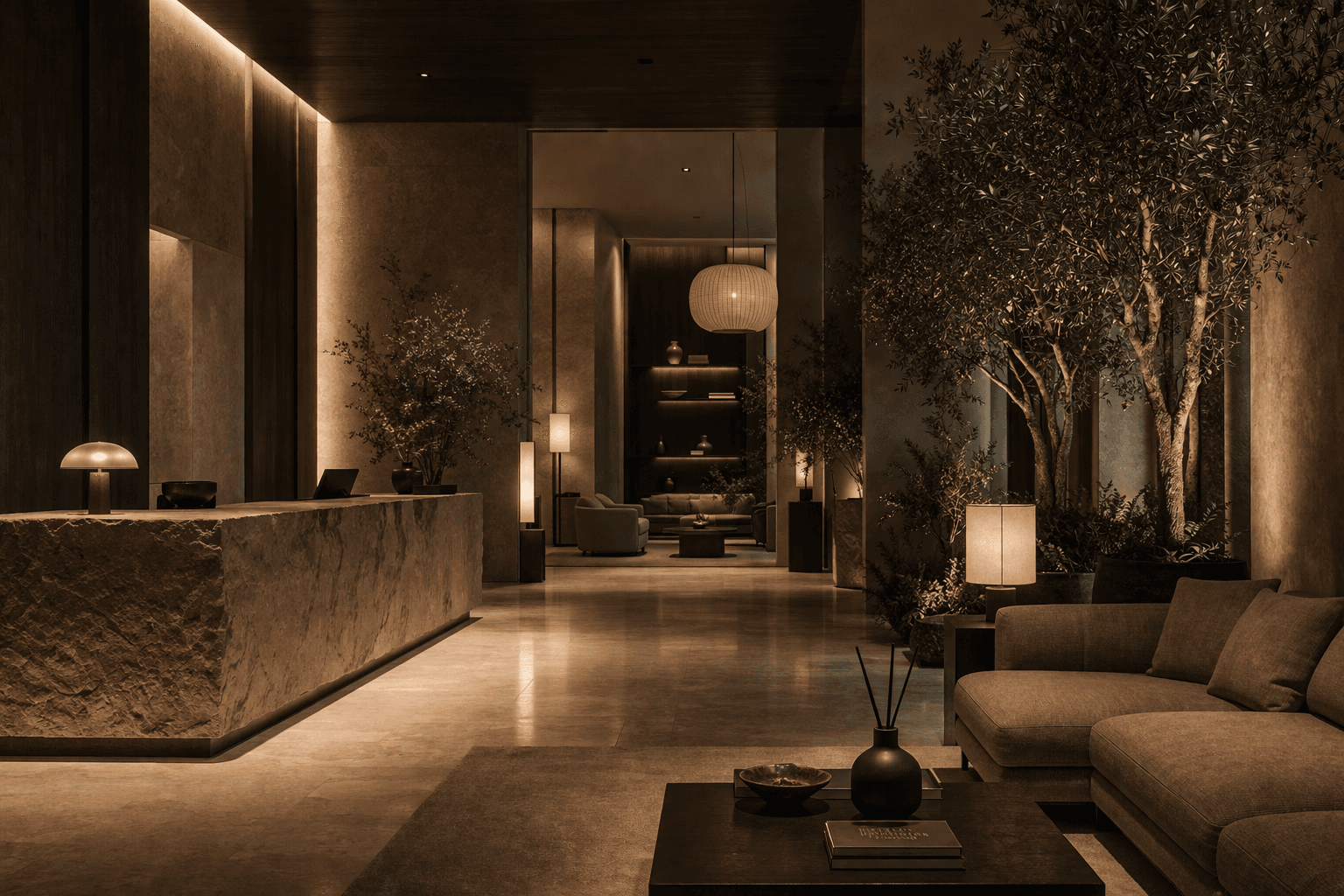
Lobby areas, reception zones, corridors, spas, and guest spaces establish perception before a room is even seen.
Clinics & Dental Spaces
The goal is to reduce tension and soften the feeling of clinical coldness — without creating the impression of a perfume store.
Boutiques & Showrooms
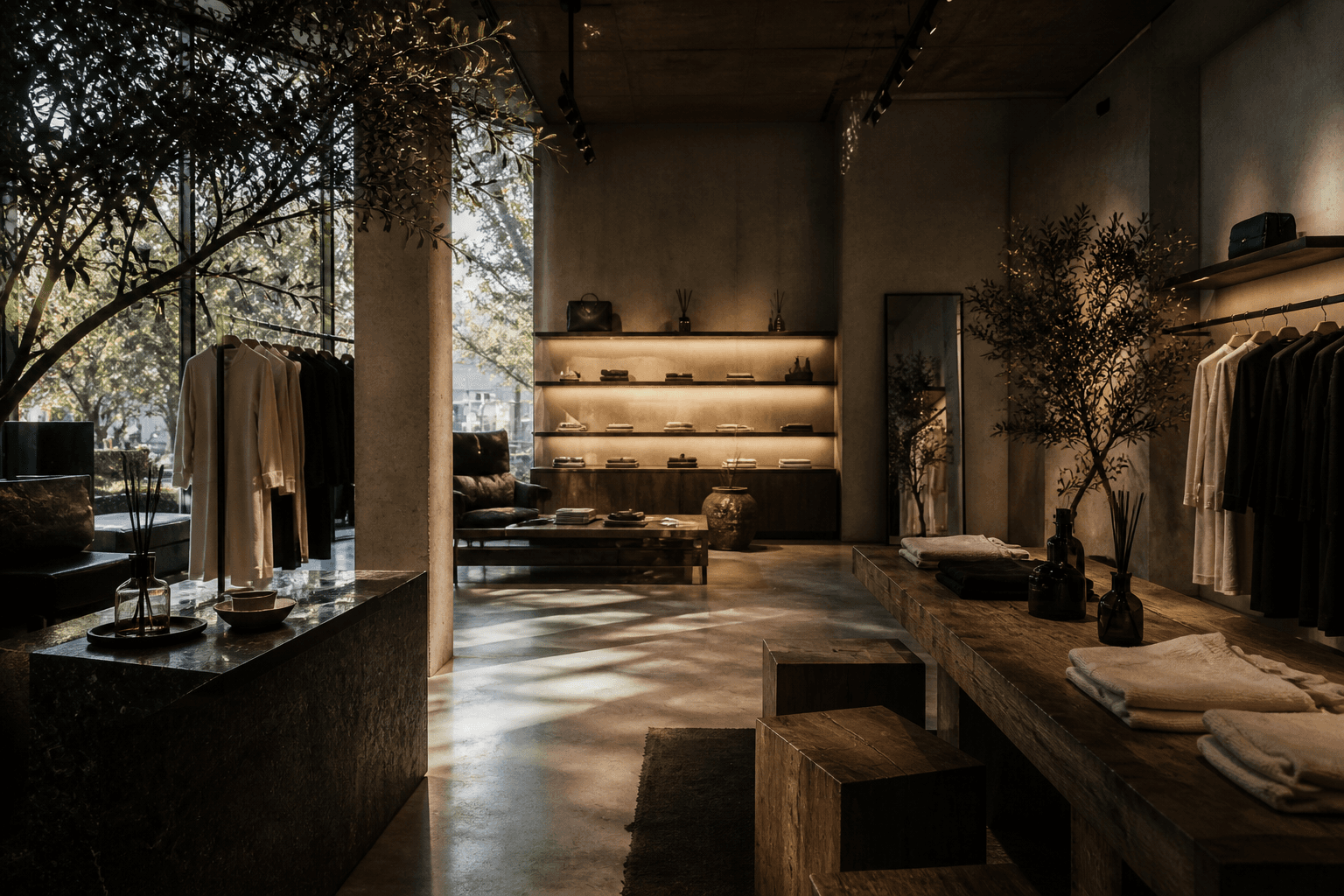
Scent helps transform a visual identity into a physical experience.
Fitness Clubs
Freshness, energy, and odor control become especially important in changing rooms, waiting areas, and reception zones.
Offices & Meeting Spaces
Scent can reinforce feelings of structure, cleanliness, and professionalism.
Why Strong Fragrance Is Usually a Mistake
Good scenting should not be obvious.
If the first reaction is:
"What is that smell?"
the intensity is probably too high.
Professional scenting works at the level of atmosphere.
Its role is not to demand attention — but to create a feeling:
clean, calm, thoughtful, elevated, comfortable.
Too much fragrance can become distracting, exhausting, or inconsistent with the environment.
That is why composition, intensity, and diffusion matter equally.
Conclusion
Professional scenting is not an air freshener and not decorative fragrance for a room.
It is a tool for shaping perception.
It helps a space feel complete — visually, emotionally, and physically.
People may not remember a specific note.
But they remember the feeling:
it felt calm, clean, elevated, and worth returning to.
That feeling becomes part of the brand itself.
Scent Selection
for Your Space